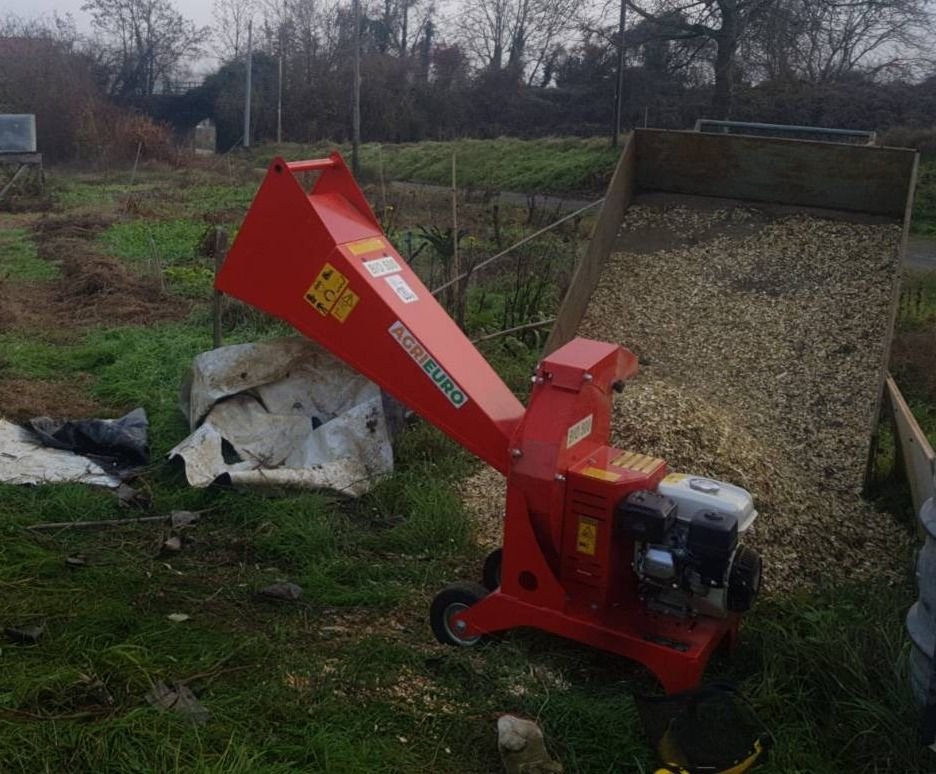
Hedge laying trial
Yesterday I had a go at hedge laying, an ancient technique mostly used in Britain to create beautiful living fences that can effectively block cattle (not sure they can stop wild boars, I'll keep you posted:)) and host a variety of wildlife, notably my beloved life-enriching companions: the little birds. One of such friends was indeed flying around yesterday for a sneak preview at what I was doing and seemed pleased with the results.Yay! Looking forward to see how the plants will respond in spring...
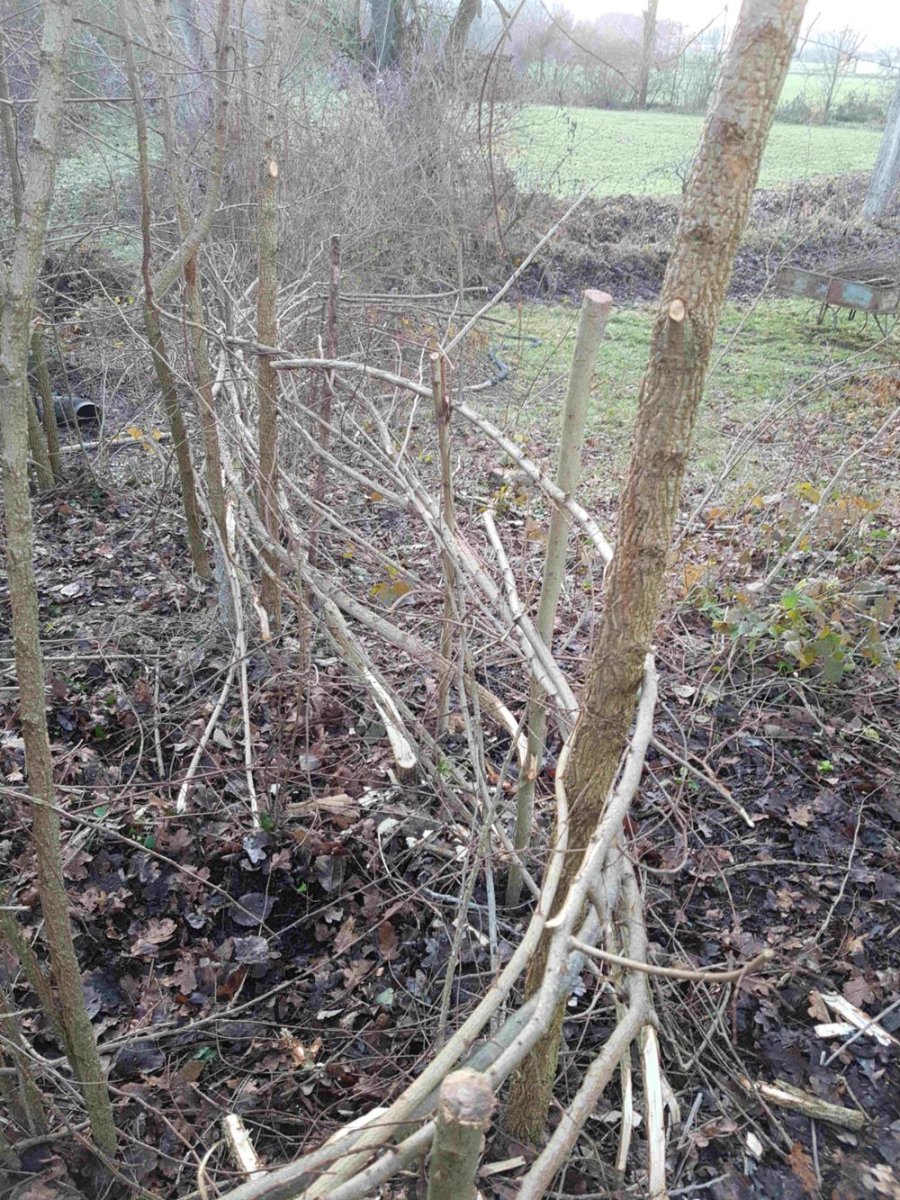
So, the technique is absolute genius: you slice trees/shrubs at their base and take away part of the trunk to be able to bend the plant and to lay it down at an about 30° angle to the horizontal. If you do that correctly the tree still survives and it is stimulated to emit a lot of vertical shoots both from its base and from the heavily-inclined stem. After already a few months, you find yourself with a tight barrier of vegetation.
Since the plants that have been broken at the base are initially delicate, they need to be kept in place by supporting them with stakes which are in turn connected together by weaving some long & straight branches around them.
I absolutely love the beauty of the "soon-to-be-living" fence and found it very easy to build. The most astonishing aspect is that no materials whatsoever are needed other than branches that you find on the spot!
- Will the plants (elms, maples, robinias, priest-hats) survive and go wild with shoots?
- will I have enough vegetation near ground level?
- is the system strong enough to keep the broken trees in place?
- willl it become strong once the plants grow and intertwine into one single network?
...those are the questions I am eager to find a reply to...
And if all those answers are "yes", then...
- why no one seems to be doing this in Italy?
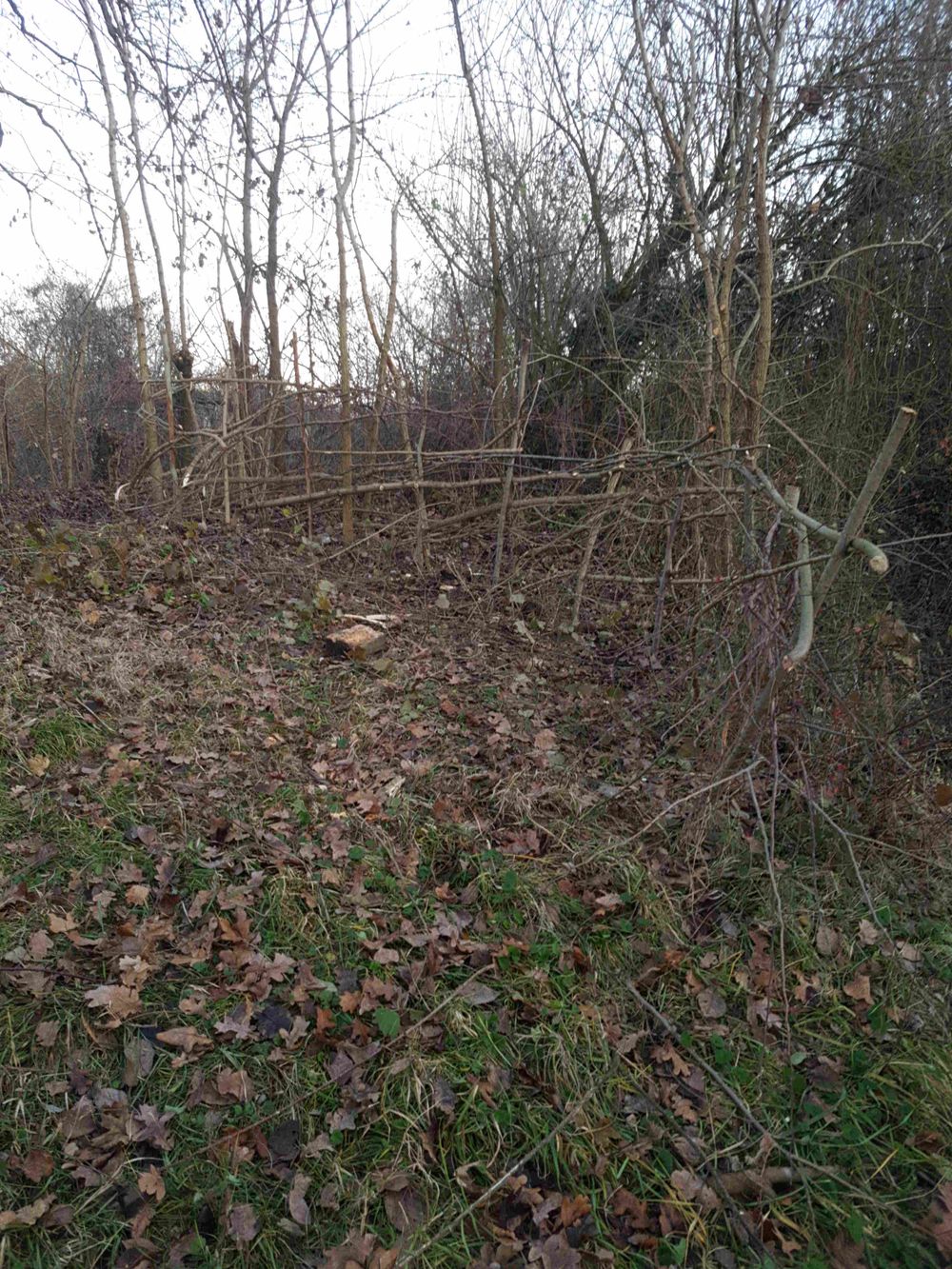 Overview of the stretch of fence I did this year as a proof-of-concept
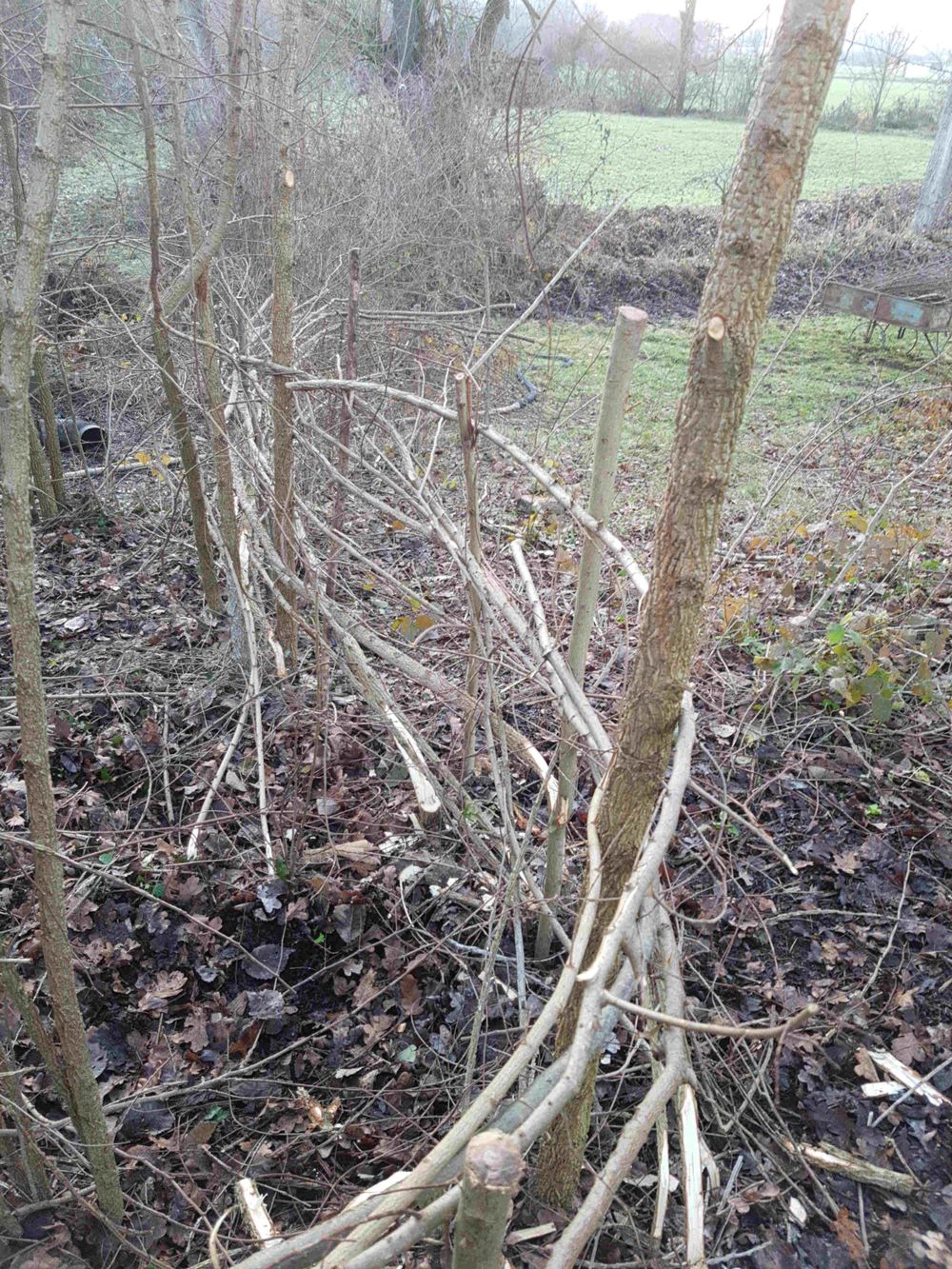 Top view of those sinuous curves
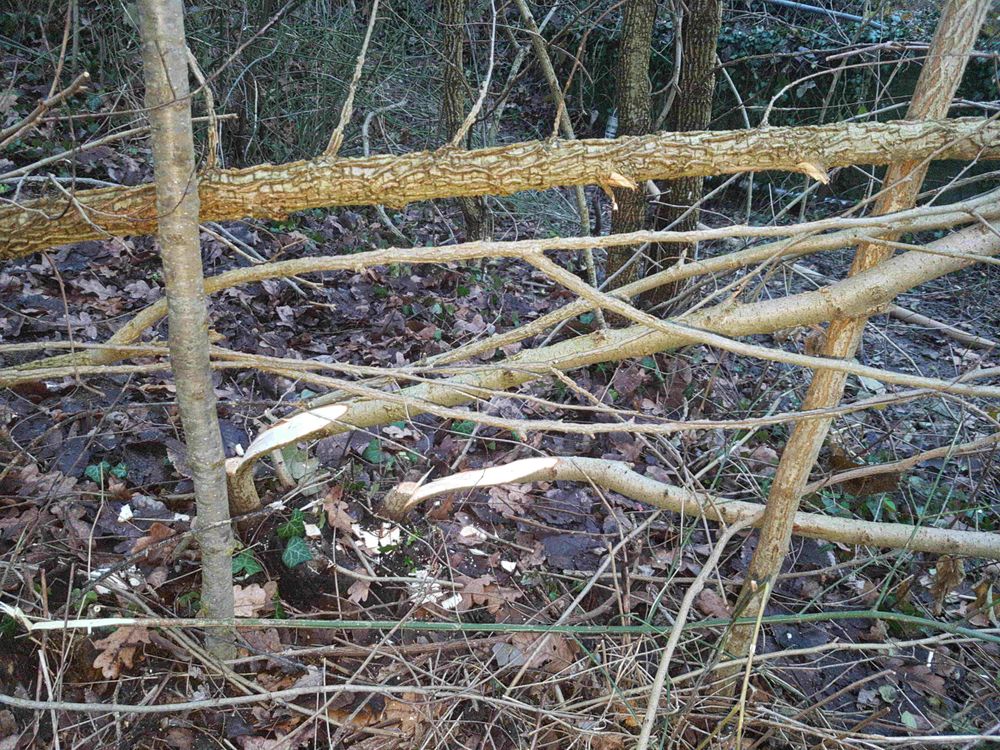 Detail of the technique on how trunks are bent. Now you got it?