Innovation pipeline winter 2023
New year, new challenges. With this post I'll be presenting some of the works that I will be carrying on during these next months to continue innovating at the farm.
Fencing: I've decided to fence off part of the food forest because I wanna use it to plant potatoes and then a cover crop to get my herbaceous layer started. Apart from the hedglaying trial which I've done in another section as a test, I'm now doing sections using dead branches woven between stakes. After doing a first section on top of a bank, I am now doing another section that climbs up on irregular terrain (and where it proved too difficultto setup the rigid fence that I've bought). I'm finding great aestetic pleasure in these wooden fences and great satisfaction in the use of only locally sourced and natural materials (branches). The amount of work to collect the branches is however very substantial so I'm using this technique only for the sloped parts of the terrain. For the flat bits I'll be putting up a metal grid supported by stakes (at 2m distance). I still need to work out how to fix the grid well on the ground so that animals cannot dig their way under it, too easily...
Water infiltration pond: last year's droughts convinced me that I need more water to the food forest. I want to divert a gutter from the nearby stables and channel the water to a small pond. At the moment I'm skeptical about the aestetics and practicality of having 30m of PVC pipe running on the field...but I guess sometimes function trumps beauty....
The pond will not be lined and will be large and shallow, with the aim of absorbing the water and distribute it as much as possible in the soil. Based on the response of the soil (which is pure clay), I will have to assess whether this works or if I need to change the design to make it a water storage pond instead.
Biodiversity pond. Another water-work will be the restoring of a 7 cubic meters cement tank for water storage near the river. The goal is to make a pond for frogs and biodiversity. I'll use a plastic liner to make it leak-proof and build up a ramp with big blocks of stone for animals to enter it. The walls are steep so I am not sure how to make sure they can also exit, in case the water level drops. A thick-floating platform may be something worth testing. Something that I really look forward to introduce in the pond are cat-tail plants, which I want to eat!
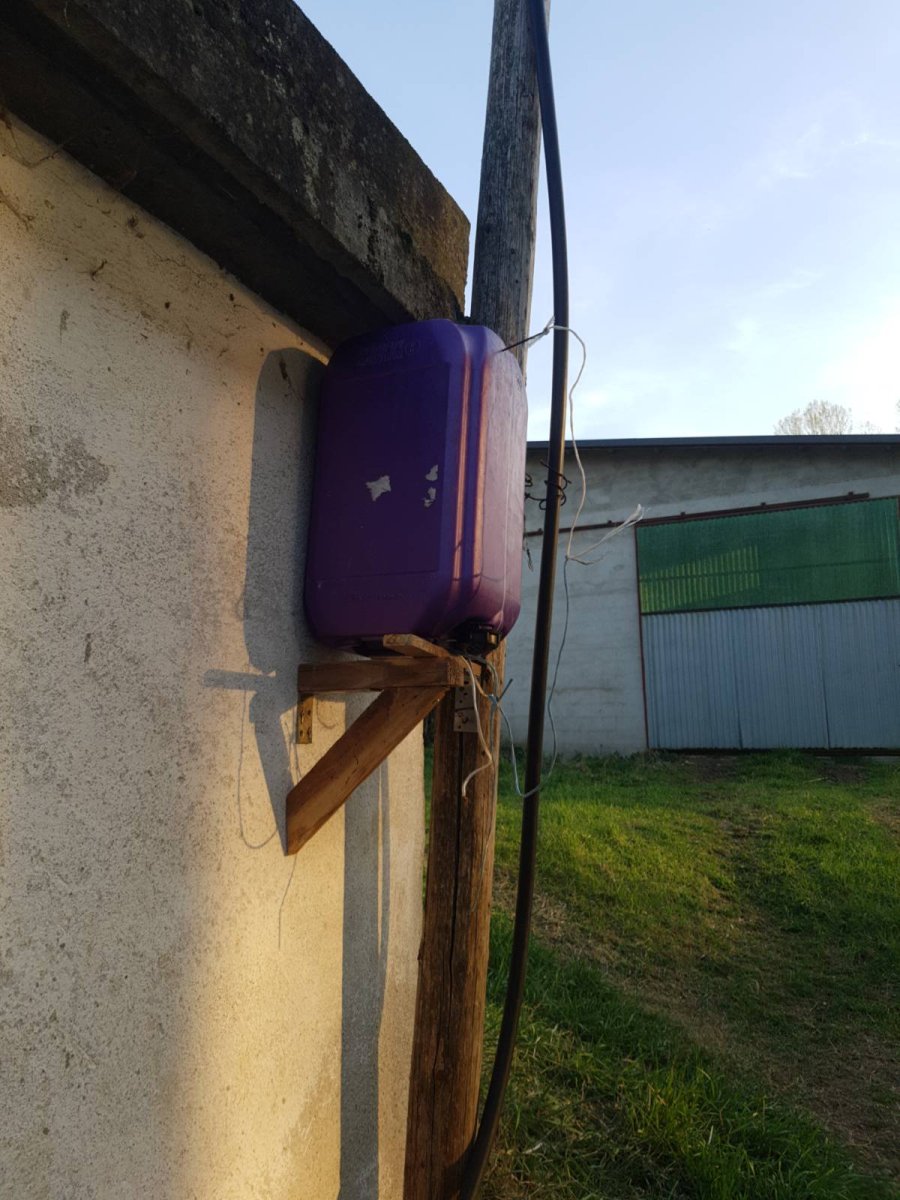
Drip irrigation is not a must, but an occasion to learn. I've decided to do a pilot installation on a part of the veggie garden this year to make it much less annoying to water it. I'm aiming to have a flexible system with one water pipe from which the irrigation side-pipes depart. I'd like to be able to easily remove some of the pipes during the times when they are not needed. The main challenge here is deliverying the water to the system with an appropriate pressure and flow.
An area of research I'd like to expore is the cultivation of trees with edible leaves. I've identfied some species (white mulberry and lindens) which I'd like to cultivate on a double line on the side of the existing veggie garden. The tree will be managed via coppicing so that they stay small and bushy and the collection of the leaves is easy. According to recent studies, such leaves are so packed with nutrients to be considered superfoods!
In the veggie garden itself I plan to run a lot experimentation, both regarding soil preparation (playing woodchips, green manures) and the adaptation of seeds to my specific conditions. My goals has not changed vs the past: obtaining decent yields of chemical-free veggies with a minimal amount of work (only very occasional weeding and watering, frequent periods of neglect for weeks etc..)
Those some of the focus areas in the weeks ahead, altough there's much more to do! Will give a few irregular updates on how all these fronts are moving forward and what practical solution I may find...